

Professional Boxing Gloves For Training & Workout - Complete Beginner Guide

Choosing the right boxing gloves is one of the most critical yet misunderstood decisions in boxing and combat sports training. Many athletes focus primarily on workouts, strength, and technique while underestimating the role of proper equipment. Boxing gloves are not merely protective gear; they directly influence performance efficiency, injury prevention, endurance development, and technical precision.
From professional competition gloves to training, sparring, and bag gloves, each design variation serves a specific biomechanical and functional purpose. Selecting inappropriate gloves can lead to poor wrist alignment, knuckle injuries, reduced punch accuracy, and long-term joint damage. This article presents a comprehensive theoretical framework for understanding how to choose boxing gloves that genuinely enhance training outcomes. Explore Wide Range of Boxing Gloves designed for power, protection, and performance.
The Functional Role of Boxing Gloves in Training
Boxing gloves serve multiple interconnected functions that go beyond basic hand protection:
- Force Distribution – Gloves disperse impact energy across a larger surface area, reducing stress concentration on knuckles and wrist joints.
- Joint Stabilization – Proper wrist support minimizes hyperextension and torsional stress.
- Training Efficiency – Glove weight influences speed, endurance, and neuromuscular adaptation.
- Injury Risk Reduction – Padding systems reduce microtrauma and repetitive strain injuries.
From a sports science perspective, gloves act as mechanical buffers that allow boxers to train at higher volumes with lower injury probability.
Understanding Boxing Glove Construction
Outer Material and Structural Integrity
High-quality boxing gloves are constructed using genuine leather, top-grain leather, or high-grade synthetic materials. Leather gloves offer superior durability, flexibility, and shape retention, making them ideal for long-term training and professional use. Synthetic gloves, when engineered properly, provide affordability without compromising functional safety.
Padding Composition and Density
Modern boxing gloves use layered foam systems designed to absorb kinetic energy progressively. Denser padding enhances durability for heavy bag training, while softer padding improves safety during sparring sessions. Gloves engineered for competition often use compact padding to maximize speed and feedback.
Wrist Support Mechanism
Wrist support is a critical determinant of glove effectiveness. Advanced gloves feature reinforced cuffs, extended wrist areas, and high-quality closure systems that maintain joint alignment during high-impact punches.
Types of Boxing Gloves
Training gloves are multi-purpose and suitable for bag work, pad drills, and controlled sparring. They offer balanced padding and are commonly used by beginners and intermediate athletes.
Sparring Boxing Gloves

Sparring gloves are designed with additional padding to reduce injury risk to training partners. Their heavier weight encourages controlled punching and technical refinement rather than raw power.
Bag Boxing Gloves

Bag gloves prioritize durability and knuckle protection. Their padding is firmer to withstand repetitive impact against heavy bags and pads.
Competition Boxing Gloves

Competition gloves are lightweight and regulated by professional boxing authorities. They are designed to maximize speed, precision, and punching efficiency.
Boxing Glove Weight Selection: A Theoretical Perspective
Glove weight, measured in ounces (oz), significantly affects training adaptation:
- 10 oz – 12 oz: Speed development and technical training
- 14 oz: Balanced training and light sparring
- 16 oz: Maximum protection and endurance conditioning
Heavier gloves increase muscular fatigue and cardiovascular demand, while lighter gloves improve reaction time and punch velocity.
Material Science and Performance Correlation
Leather boxing gloves exhibit superior elastic recovery, allowing them to maintain shape even after extended use. This consistency improves punch feedback and control. High-grade synthetic gloves, when layered properly, replicate many of these characteristics while offering cost efficiency.
Breathable inner linings reduce moisture accumulation, minimizing bacterial growth and extending glove lifespan.
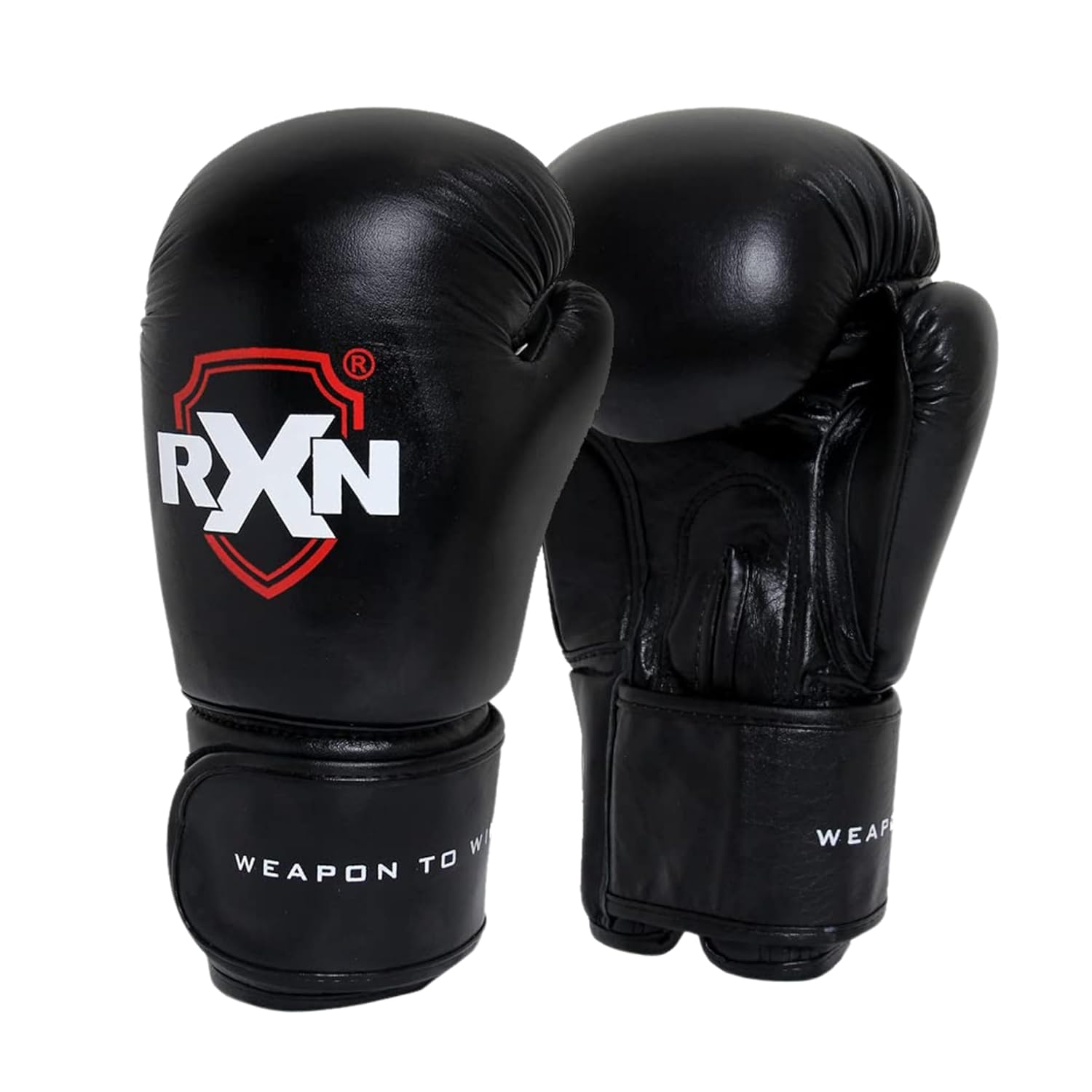
RXN Boxing Gloves: Training-Oriented Design Philosophy
Modern boxing glove collections are designed to address diverse training requirements, including:
- Competition-grade leather gloves for elite performance
- Sparring-focused padding systems for partner safety
- Synthetic training gloves for beginners and fitness users
- Advanced wrist-lock designs for joint stability
This diversity ensures that athletes at every skill level can select gloves aligned with their training goals.
- Biomechanics of Punching with Proper Gloves
- From a biomechanical standpoint, gloves influence:
- Punch trajectory
- Impact angle
- Wrist alignment
- Energy transfer efficiency
Properly designed gloves maintain neutral wrist positioning, ensuring force flows linearly through the kinetic chain—from shoulder rotation to fist impact—thereby reducing injury risk and maximizing power output.
Psychological Impact of Proper Boxing Gloves
Beyond physical benefits, gloves influence psychological readiness. A well-fitted glove enhances confidence, allowing athletes to punch with commitment and focus. This psychological security translates into improved technique execution and training consistency.
Maintenance, Longevity, and Hygiene
Theoretical training effectiveness also depends on equipment maintenance. Gloves should be:
- Air-dried after use
- Cleaned regularly
- Used with hand wraps
Proper maintenance extends glove lifespan and preserves padding integrity.
Conclusion
Choosing boxing gloves is a strategic training decision rooted in biomechanics, material science, and performance psychology. Gloves are not interchangeable accessories but precision tools designed to shape training quality, safety, and long-term athletic development.
By understanding glove construction, weight dynamics, padding systems, and training application, athletes can select boxing gloves that truly enhance performance rather than hinder progress. Investing in the right gloves is an investment in consistency, safety, and technical excellence.
FAQs-Boxing Gloves
1. How do I choose the right boxing gloves for training?
The right boxing gloves depend on your training purpose. For general training, 12 oz to 14 oz gloves are ideal, while 16 oz gloves are recommended for sparring. Always consider glove material, padding quality, and wrist support to ensure safety and performance improvement.
2. What boxing glove weight is best for beginners?
Beginners should typically start with 12 oz or 14 oz boxing gloves. These gloves provide a balance between protection and control, making them suitable for bag work, pad training, and learning proper punching technique.
3. Are leather boxing gloves better than synthetic gloves?
Leather boxing gloves are generally more durable, breathable, and comfortable over long-term use. Synthetic gloves, however, are more affordable and suitable for beginners or casual training. Both can be effective if designed with proper padding and wrist support.
4. Which boxing gloves are best for sparring?
Sparring gloves with extra padding, typically 14 oz or 16 oz, are best for partner training. These gloves reduce impact force and minimize injury risk, making them essential for safe sparring sessions.
5. Can I use the same boxing gloves for bag work and sparring?
While it is possible, it is not recommended. Bag work requires firmer padding, whereas sparring gloves need softer cushioning. Using separate gloves improves glove lifespan and ensures safety during training.
6. How important is wrist support in boxing gloves?
Wrist support is extremely important as it helps maintain proper alignment during punches and reduces the risk of sprains and joint injuries. Gloves with reinforced cuffs or secure wrist closure systems are ideal for training.
7. How long do boxing gloves last with regular training?
With proper care, high-quality boxing gloves can last 12 to 24 months of regular use. Factors such as material quality, training frequency, and maintenance practices significantly influence glove longevity.
8. What size boxing gloves should I choose based on body weight?
Glove size selection depends more on training purpose than body weight. However, heavier athletes often prefer 14 oz or 16 oz gloves for added protection, while lighter athletes may choose 12 oz gloves for better control.
9. Are boxing gloves necessary for fitness boxing workouts?
Yes, boxing gloves are essential for fitness boxing as they protect the hands, improve punching efficiency, and prevent injuries during high-repetition workouts such as bag training and cardio boxing.
10. What type of boxing gloves are used in competitions?
Competition boxing gloves are lightweight, typically 8 oz or 10 oz, and follow strict regulations set by boxing authorities. These gloves are designed for speed, accuracy, and performance rather than daily training.